30 September 2026
The return of enlargement to the forefront of the European agenda, differences among EU capitals over the pace and conditions of the process, and the implications for Kosovo were the focus of the high-level discussion “European Capitals on Enlargement: Perspectives, Priorities and Kosovo’s Path Forward”.
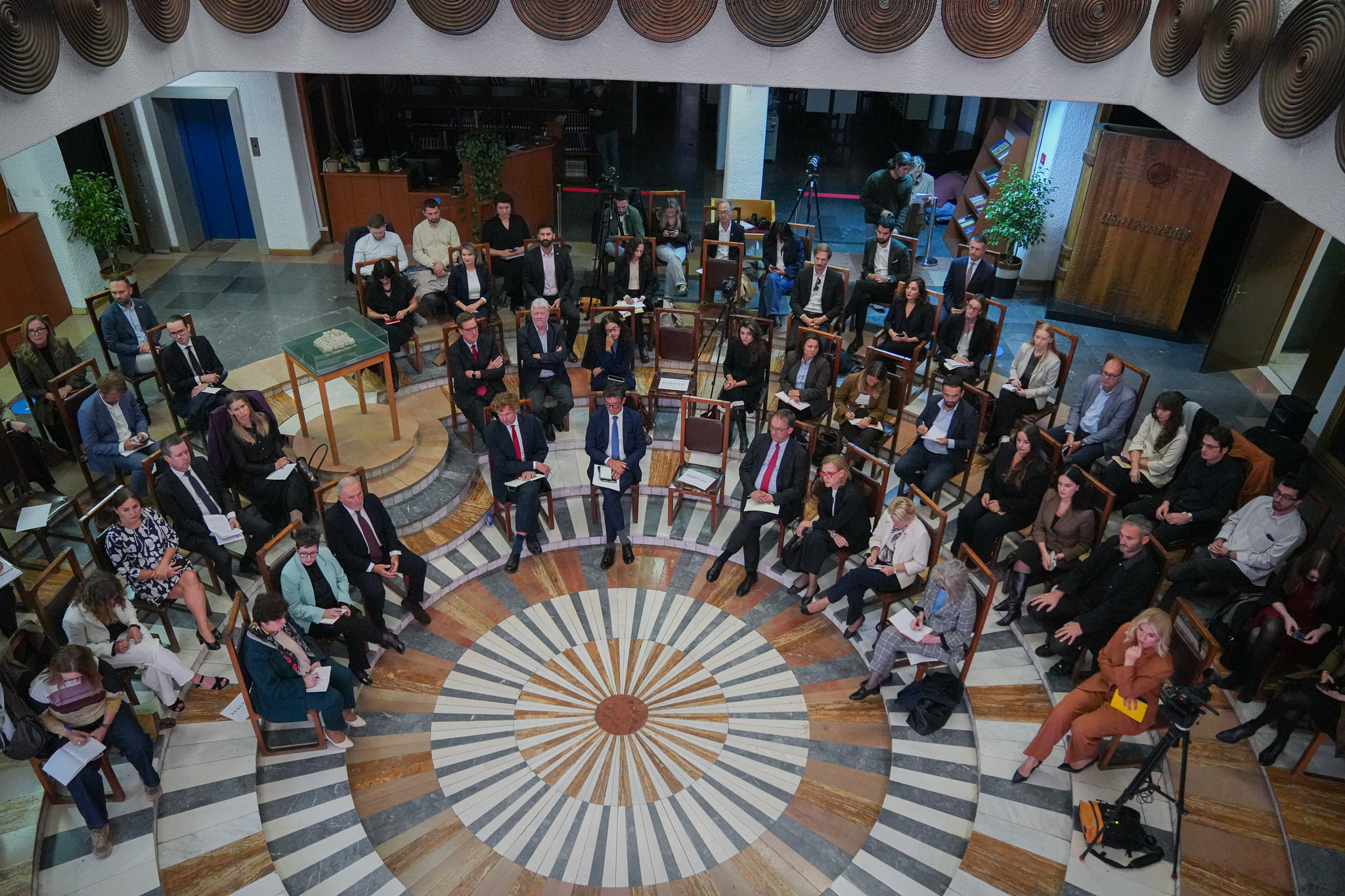
The discussion brought together experts from across Europe, institutional representatives, diplomats and members of civil society in Prishtina to discuss how EU Member States’ approaches are shaping the future of the enlargement process and what they mean for Kosovo’s European perspective.
The event was organised by the Kosovar Civil Society Foundation (KCSF), Austro-French Centre for Rapprochement in Europe, Balkan Research Institute and French Institute of International Relations.
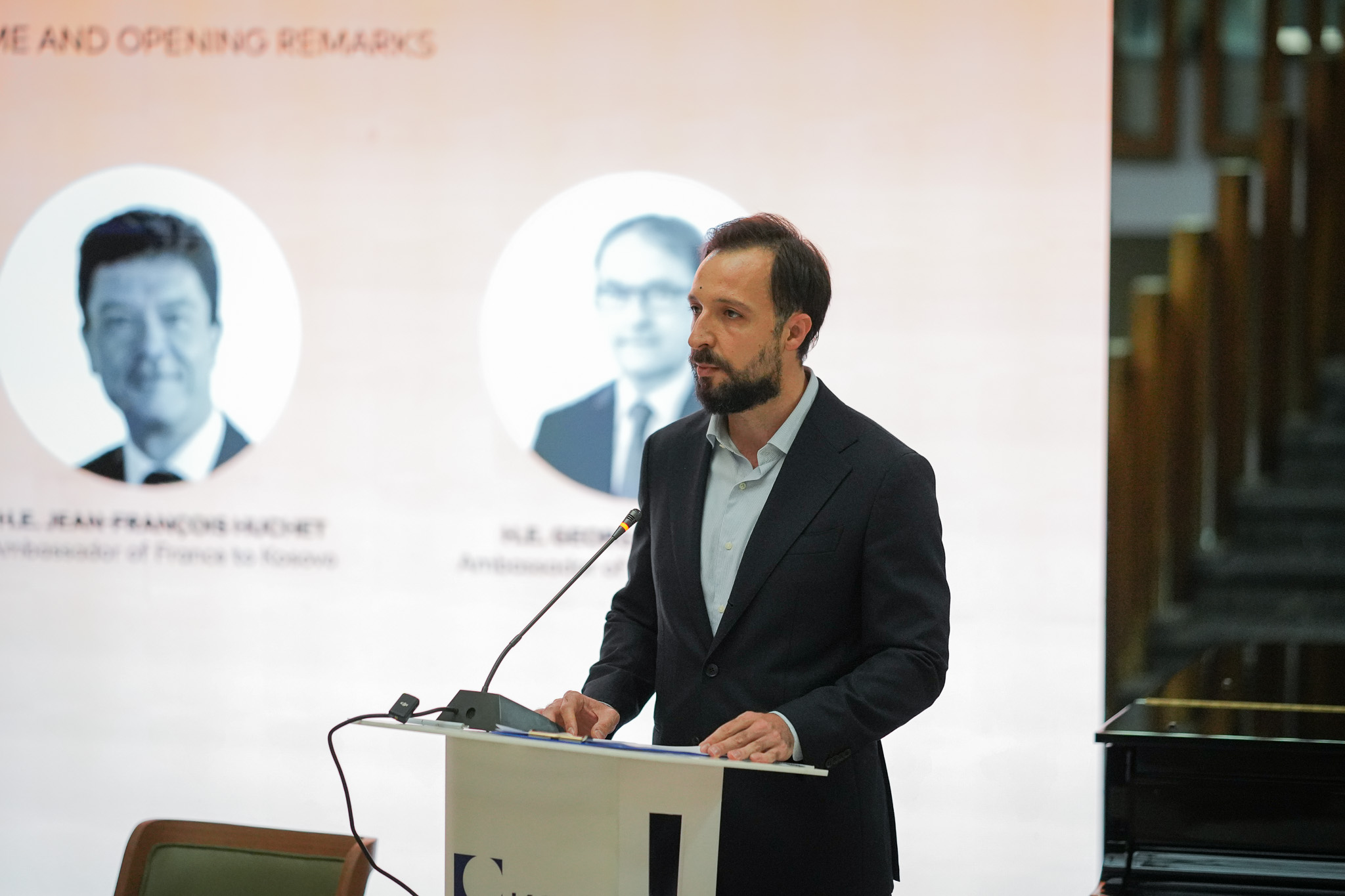
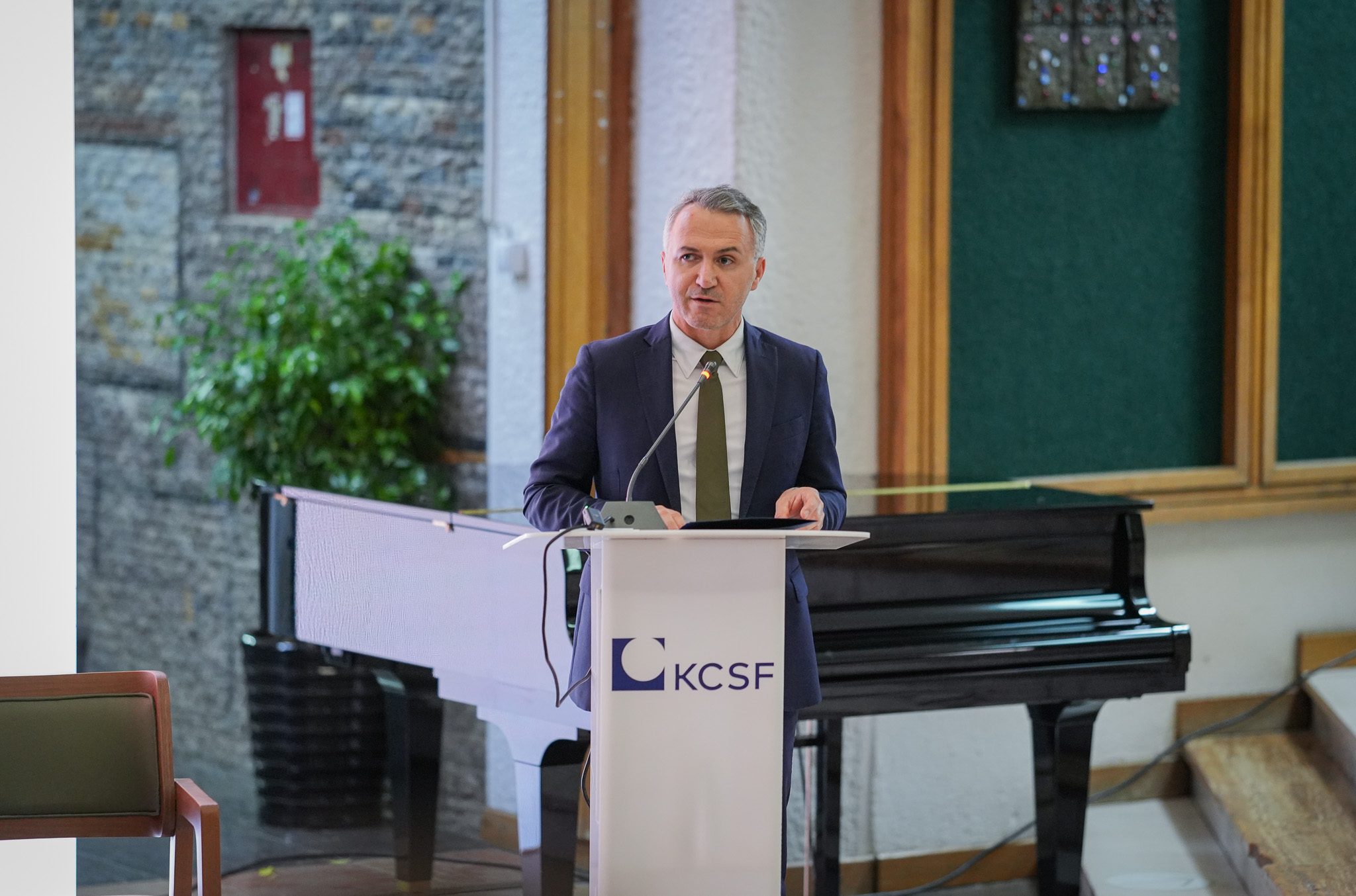
In his opening remarks, Dren Puka, Executive Director of KCSF, emphasized that the renewed momentum for enlargement following Russia’s aggression against Ukraine is also changing the logic of the process, as security, geopolitical alignment and the political readiness of Member States are gaining weight alongside reforms. He said that Kosovo’s case highlights a contradiction within the logic of enlargement itself: the process should be based on merit, yet progress also depends on Member State political decisions concerning the recognition of Kosovo and on consensus within the EU.
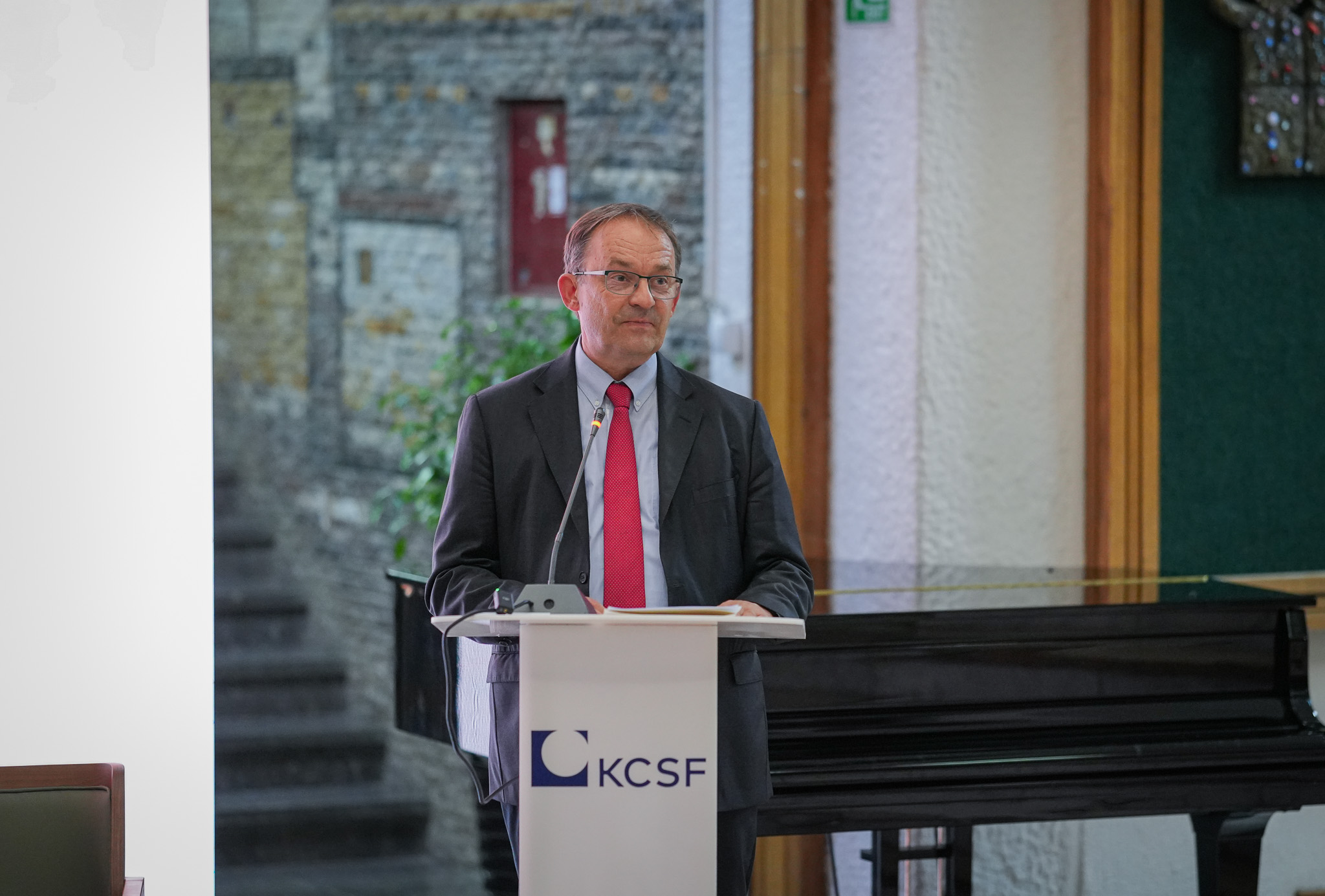
Jean-François Huchet, Ambassador of France to Kosovo, stated that enlargement has returned to the centre of Europe’s strategic agenda, but that beyond the strategic consensus, EU capitals still differ on the pace, conditions and methods of enlargement. For France, enlargement must be credible, merit-based and accompanied by parallel preparations within the EU to ensure that its institutions, policies and budget are ready for new members. He pointed to Kosovo’s membership application and visa-free travel to the Schengen area as important developments on its European path, while stressing that the way forward requires sustained reforms, the rule of law, stronger institutions and continued engagement in the dialogue with Belgrade.
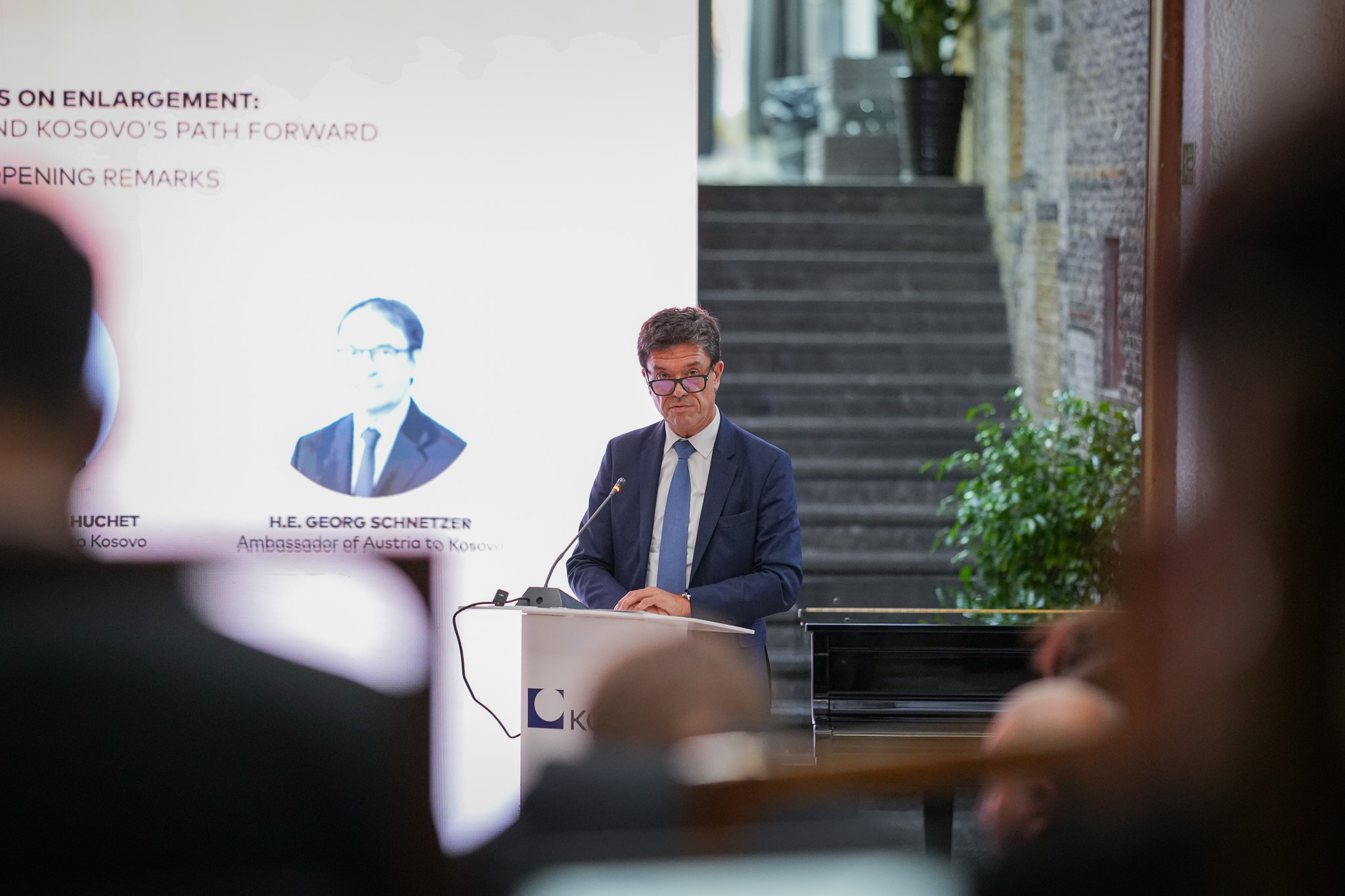
Georg Schnetzer, Ambassador of Austria to Kosovo, emphasised that enlargement is a strategic priority for Europe’s security and strategic autonomy, but that the current approach does not match the geopolitical urgency. According to him, the process should move faster through concrete steps, including an assessment of Kosovo’s EU membership application by the European Commission as a step towards candidate status, moving ahead with accession negotiations, the simplification and streamlining of procedures, including through qualified majority voting, and the prevention of blockages arising from bilateral issues, while maintaining the agreed criteria and reform requirements. He presented gradual integration as a way to deliver tangible benefits before membership, underlining that full membership of the Western Balkans in the EU remains the ultimate goal.
In his address, Jeton Zulfaj, Chief Negotiator of the Republic of Kosovo with the European Union, focused on the gap between Kosovo’s progress on reforms and practical integration with the EU, pointing to delays caused by the blockade in the Assembly and to the stalled membership application. According to him, the Council has yet to request the Commission’s opinion on Kosovo’s application. He said that the priority should be obtaining candidate status and opening accession negotiations, while normalization of relations with Serbia could be addressed through a dedicated chapter during the accession process, as it is for Serbia under Chapter 35. He emphasised that, in the current geopolitical context, Kosovo’s full alignment with the EU’s Common Foreign and Security Policy and adherence to the EU’s fundamental values should weigh more heavily in assessing its progress.
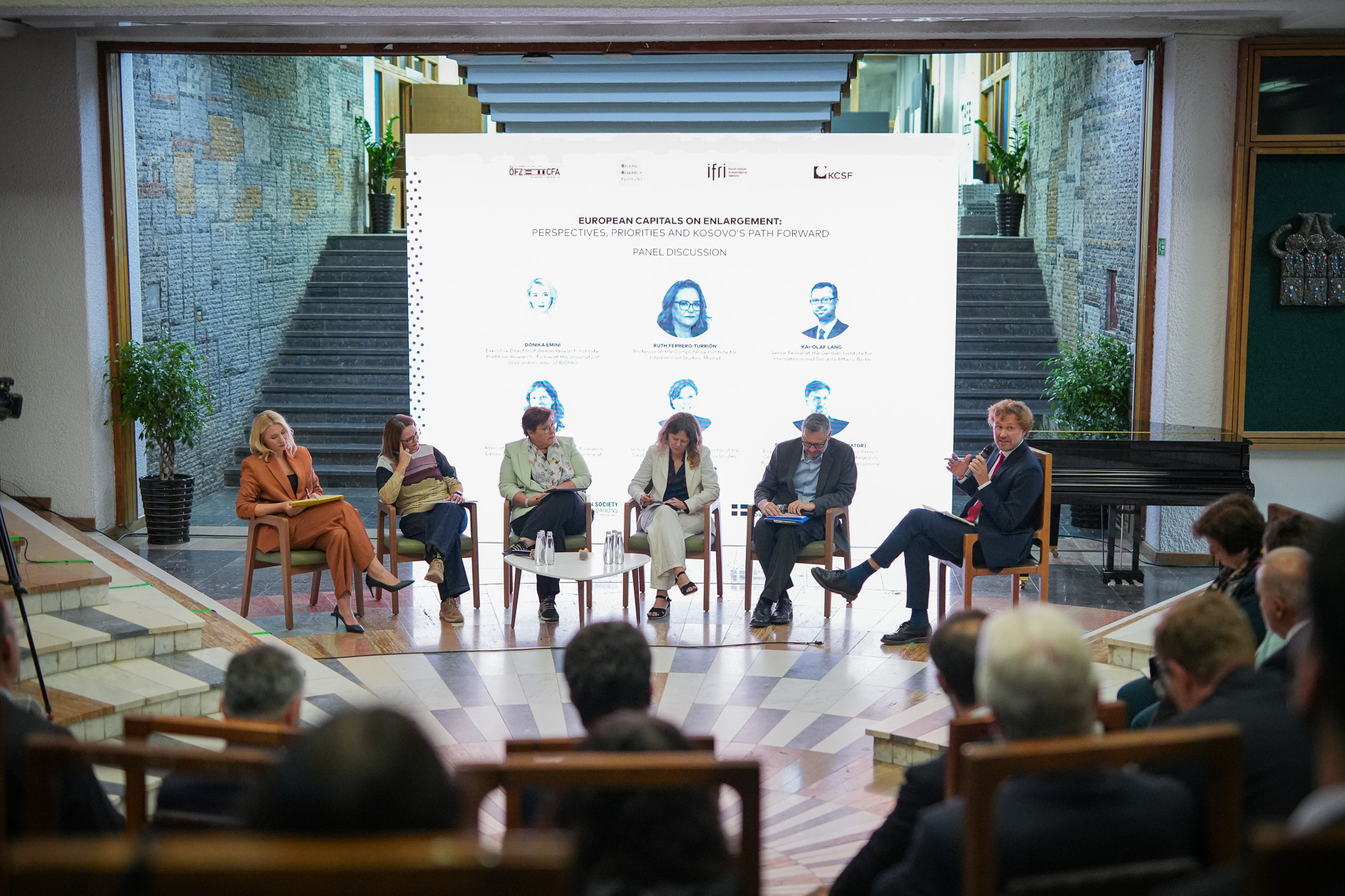
Several assessments of the state and future of the enlargement process emerged during the panel discussion, moderated by Florent Marciacq, Deputy Secretary General of the Austro-French Centre for Rapprochement in Europe and Research Associate at the Institut français des relations internationales (Ifri) in Vienna and Paris.
The discussion highlighted that Member States’ positions on enlargement are shaped by how each country interprets the geopolitical imperative, as well as by domestic interests, security concerns, the EU’s absorption capacity and differing visions for the EU’s own future. The panel noted that political support for enlargement has increased since the war in Ukraine, but that there is not necessarily a shared understanding of how, or how far, the EU should enlarge.
For Kosovo’s path towards the EU, this means that geopolitical momentum does not automatically translate into progress. Kosovo’s position depends not only on meeting the criteria, but also on political cohesion among the Member States and the place Kosovo holds among their enlargement priorities.
The discussion highlighted the argument that Kosovo’s European path should not be viewed only through the lens of the Kosovo–Serbia dialogue. It also discussed the possibility of using gradual integration mechanisms and new forms of participation in areas where the question of status poses fewer constraints.
The panel included Donika Emini, Executive Director of the Balkan Research Institute in Prishtina, Research Fellow at the University of Graz and member of BiEPAG; Ruth Ferrero-Turrión, Professor at the Complutense Institute for International Studies in Madrid; Kai-Olaf Lang, Senior Fellow at the German Institute for International and Security Affairs in Berlin; Clotilde Warin, Associate Research Fellow at the Institut Jacques Delors and Director of the Europe Programme at Eastern Circles in Paris; and Doris Wydra, Senior Scientist and Executive Director of the Salzburg Centre of European Union Studies in Salzburg.
The event was supported by Open Society Foundations Western Balkans, the Austrian Embassy in Prishtina and Sweden.